
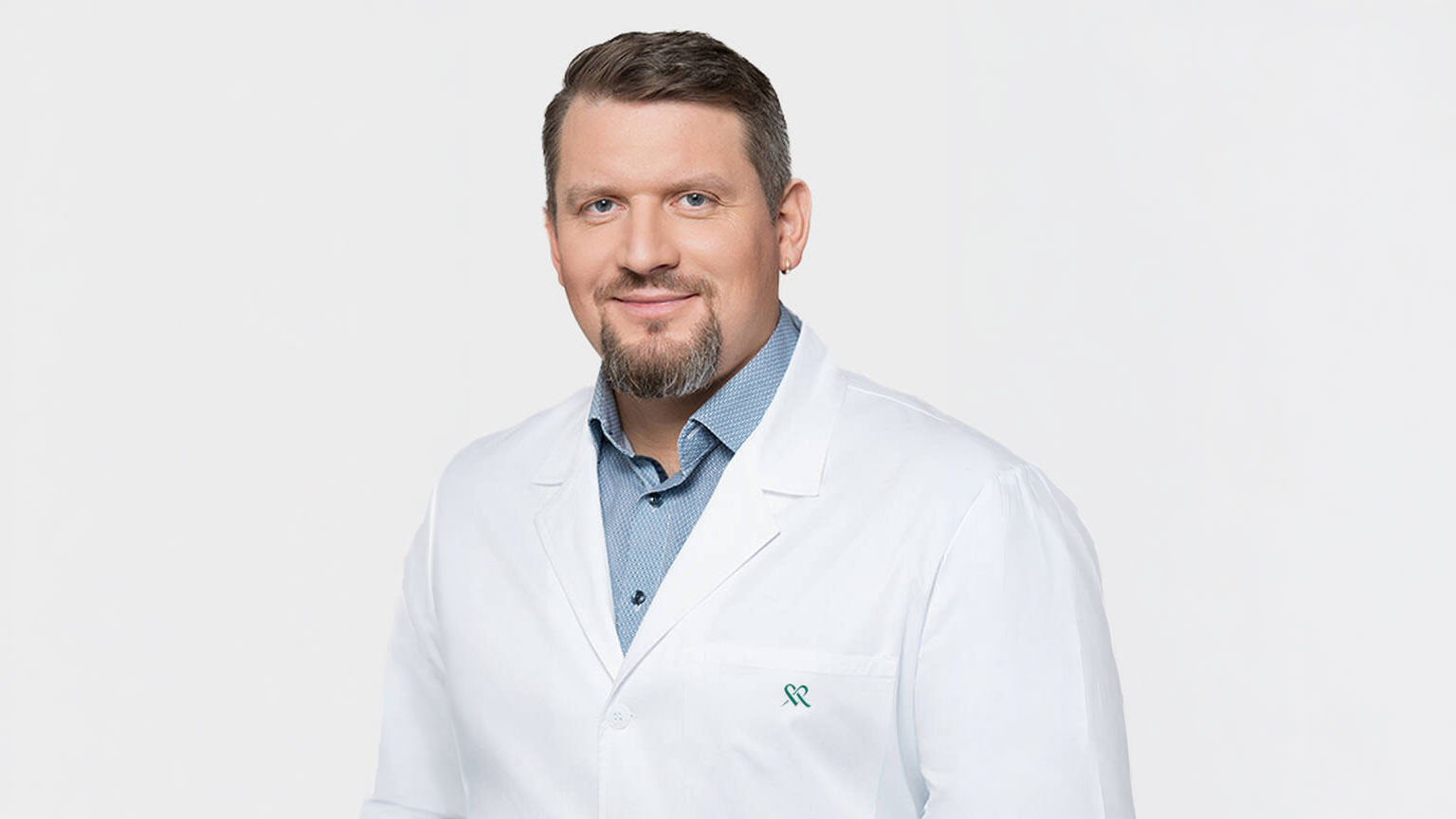
For patients considering surgery, understanding their surgeon’s experience is an important part of choosing where to have treatment. In this edition of MMG’s Meet the Surgeon, Sara Gezdari introduces Dr Justinas Vaičiulis, a consultant orthopaedic and trauma surgeon at Meliva Hospital in Vilnius, Lithuania.
With more than 17 years of clinical experience, Dr Vaičiulis specialises in shoulder, elbow and knee conditions, sports injuries and musculoskeletal trauma. His practice combines arthroscopic surgery, ligament reconstruction and rehabilitation, with a focus on restoring function and helping patients return safely to everyday activities.
Sara Gezdari: Dr Vaičiulis, could you tell us about your medical background and how you came to specialise in orthopaedic surgery?
I graduated in Medicine from Vilnius University in 2008 and completed my residency in Orthopaedic Traumatology there between 2009 and 2014. My training included work at several of Lithuania’s leading trauma centres, including Vilnius University Hospital.
Since qualifying as a consultant orthopaedic surgeon in 2014, I have practised at Republic Vilnius University Hospital, Santaros Clinics and Meliva Hospital, where I have been a consultant since 2018. My work spans both planned orthopaedic procedures and acute trauma care.
Sara: Which conditions and procedures are the main focus of your practice?
My principal interests are shoulder, elbow and knee surgery, including sports injuries, joint disorders and traumatic injuries affecting the musculoskeletal system.
For the knee, my work includes arthroscopic surgery, meniscal procedures and anterior cruciate ligament, or ACL, reconstruction. For the shoulder, I perform rotator cuff repairs and stabilisation procedures, including Bankart reconstruction and Latarjet surgery. I also undertake elbow arthroscopy, fracture fixation and treatment for degenerative conditions affecting these joints.
Sara: Knee injuries can affect people’s working lives as well as their sporting activities. What does your work in this area involve?
My knee practice includes assessing and treating ligament injuries, meniscal problems and other joint conditions. ACL reconstruction and meniscal surgery are particular areas of interest.
The purpose of treatment extends beyond addressing the injury itself. My clinical focus is on restoring function, relieving pain and supporting a safe return to work, sport and everyday activities. Surgery and rehabilitation are both parts of that process.
Sara: Shoulder surgery is another important part of your practice. Could you explain the range of procedures you perform?
My shoulder work includes rotator cuff repair and procedures to address instability, including Bankart reconstruction and Latarjet surgery. I also treat degenerative shoulder disorders and traumatic injuries.
These represent different aspects of shoulder surgery. My practice encompasses both arthroscopic techniques and reconstructive procedures, allowing me to treat a range of conditions affecting shoulder function and stability.
Sara: You mention arthroscopic surgery frequently. How central is it to your work?
Arthroscopy is a major part of my practice across the shoulder, elbow and knee. My specialist interests include arthroscopic knee procedures, elbow arthroscopy and arthroscopic techniques used in shoulder surgery.
I combine these surgical techniques with evidence-based rehabilitation. The aim is to address the underlying condition while supporting the patient’s recovery of movement and function.
Sara: Does your practice also include treatments other than surgery?
Yes. Alongside surgery, I perform musculoskeletal ultrasound and image-guided joint injections.
These include platelet-rich plasma, known as PRP, hyaluronic acid and other biological therapies where clinically appropriate. They form part of the range of treatments available within my practice, alongside surgical procedures and rehabilitation.
Sara: You continue to work in university and emergency trauma hospitals. How does that complement your elective surgical practice?
My appointments involve both elective orthopaedics and acute trauma care. That gives me experience across planned treatment for joint conditions and the management of injuries requiring urgent assessment and surgery.
Fracture fixation and traumatic musculoskeletal injuries remain important parts of my work, alongside sports surgery and the treatment of shoulder, elbow and knee disorders.
Sara: How have you continued to develop your specialist knowledge?
Postgraduate education has been a consistent part of my career. I hold Advanced Trauma Life Support certification and have completed the AO Trauma Basic and Advanced Principles of Fracture Management programmes.
I have also undertaken specialist musculoskeletal ultrasound training at Vilnius University and presented scientific research at the EFORT Congress and the Baltic Congress of Traumatology and Orthopaedics.
Alongside my clinical work, I serve as a Board Member and Treasurer of AO Trauma Lithuania. I am also a member of the Lithuanian Society of Orthopaedists and Traumatologists and AO Trauma International.
Sara: What expertise do you bring to patients considering treatment through MMG?
At Meliva Hospital in Vilnius, I offer specialist experience in arthroscopic shoulder, elbow and knee surgery, sports traumatology and ligament reconstruction within a multidisciplinary hospital environment.
My practice brings together experience in elective surgery and acute trauma, supported by continuing specialist education. The clinical objectives are to relieve pain, restore function and help patients return safely to the activities that matter to them.
Explore your treatment options
If you are considering shoulder, elbow or knee treatment, explore the Treatment Packages available at Meliva Hospital through My Medical Gateway.
Unsure about the next step? Start with a free preliminary doctor consultation. You can share your available consultant letters and diagnostic information with your chosen hospital’s medical team to help establish what further assessment may be needed.
Leave a Reply