
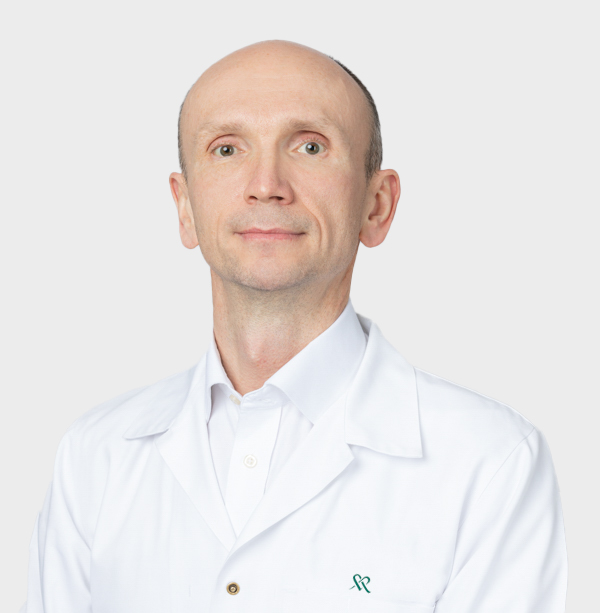
Sara Gezdari of My Medical Gateway introduces Associate Professor Dr Sigitas Ryliškis, an experienced Lithuanian orthopaedic surgeon specialising in shoulder replacement, rotator cuff repair and advanced arthroscopic surgery. Based at Meliva Kardiolita Hospital in Vilnius, Dr Ryliškis brings almost 30 years of clinical experience, international training and academic expertise to the treatment of complex shoulder conditions.
Shoulder pain can be debilitating. Whether caused by arthritis, a torn rotator cuff, sporting injury or an unstable joint, it can make everyday activities such as dressing, driving, sleeping and lifting objects increasingly difficult.
For patients facing lengthy NHS waiting lists, specialist shoulder surgery in Europe may offer an alternative worth exploring.
This week, Sara Gezdari introduces Associate Professor Dr Sigitas Ryliškis, whose clinical career has been dedicated to understanding and treating shoulder disorders.
Sara Gezdari: Dr Ryliškis, could you tell our readers about your medical background and experience?
I graduated from Vilnius University Faculty of Medicine in 1997 and subsequently specialised in orthopaedics and traumatology.
My career has focused particularly on shoulder conditions, including traumatic injuries, tendon damage, joint instability and degenerative disease. I completed my doctoral research in 2009, examining shoulder function and patients’ quality of life following surgical treatment of rotator cuff tears.
Alongside my work at Meliva Kardiolita Hospital, I practise at Republican Vilnius University Hospital, where I lead the Department of Day Surgery, Arthroscopic Surgery and Sports Medicine. I have also been involved in supervising orthopaedic residents at Vilnius University since 2008.
Sara: What are the most common shoulder conditions requiring specialist treatment?
Rotator cuff tears, shoulder instability, frozen shoulder and osteoarthritis are among the conditions frequently assessed by shoulder specialists.
Rotator cuff injuries affect the tendons responsible for stabilising and moving the shoulder. They may develop following trauma or through gradual degeneration. Shoulder instability can occur when the joint repeatedly dislocates, particularly following sporting injuries.
Advanced arthritis may cause persistent pain, stiffness and significant loss of movement. However, not every patient requires surgery. The appropriate treatment depends on the diagnosis, severity of symptoms, functional limitations and response to non-surgical treatment.
Sara: When should someone consider shoulder replacement surgery?
Shoulder replacement may be considered when severe joint damage causes persistent pain and disability despite appropriate conservative treatment.
The objective is generally to relieve pain and improve function. There are different types of replacement, including conventional total shoulder replacement and reverse shoulder replacement. The choice depends on several factors, particularly the condition of the rotator cuff, bone quality and the patient’s individual anatomy.
Careful assessment is essential because the most suitable operation varies considerably between patients.
Sara: What is the difference between conventional and reverse shoulder replacement?
Conventional shoulder replacement broadly reproduces the natural arrangement of the joint and generally requires a functioning rotator cuff.
Reverse shoulder replacement changes the joint’s mechanical arrangement, allowing the deltoid muscle to perform more of the work normally undertaken by damaged rotator cuff tendons. It can therefore be particularly useful for selected patients with severe rotator cuff deficiency combined with arthritis.
Neither procedure is universally preferable. The decision must be based on clinical findings, imaging and realistic expectations about recovery.
Sara: You specialise in arthroscopic shoulder surgery. What advantages can it offer?
Arthroscopy allows surgeons to examine and treat selected shoulder problems through small incisions using a camera and specialised instruments. It is commonly used for rotator cuff repair, treatment of shoulder instability and certain other soft-tissue conditions.
Potential advantages include less disruption to surrounding tissues and smaller incisions compared with traditional open surgery. Nevertheless, arthroscopy is not appropriate for every condition, and successful recovery depends on the nature of the injury, the procedure and postoperative rehabilitation.
Sara: How important is rehabilitation after shoulder surgery?
Rehabilitation is fundamental to recovery. Following rotator cuff repair or shoulder replacement, patients generally require a structured rehabilitation programme involving carefully controlled movement and progressive strengthening.
The precise timetable depends on the operation and the tissues being repaired. Patients must understand that improvement is gradual. Some procedures require several months of rehabilitation, and full recovery may take longer. Good communication between the surgeon, physiotherapist and patient is essential.
Sara: What should British patients consider before travelling to Lithuania for shoulder surgery?
The priority should always be an accurate diagnosis and confirmation that the proposed procedure is appropriate. Patients should understand the expected benefits, potential complications, rehabilitation requirements and arrangements for follow-up after returning home.
For international patients, the timing of travel following surgery must also be assessed individually. Choosing an experienced specialist and having a clear postoperative care plan are particularly important.
Experienced shoulder care in Vilnius
Dr Ryliškis has undertaken specialist training in the United States and several European countries, including Austria, Italy, Sweden and France. His clinical interests include rotator cuff reconstruction, shoulder replacement, Bankart repair, Latarjet procedures and other complex shoulder operations.
Through My Medical Gateway, eligible British patients can explore specialist orthopaedic treatment at Meliva Kardiolita Hospital in Vilnius, with transparent Treatment Packages and coordinated arrangements.
For those living with persistent shoulder pain, the first step towards regaining mobility is understanding the available treatment options.
Leave a Reply