
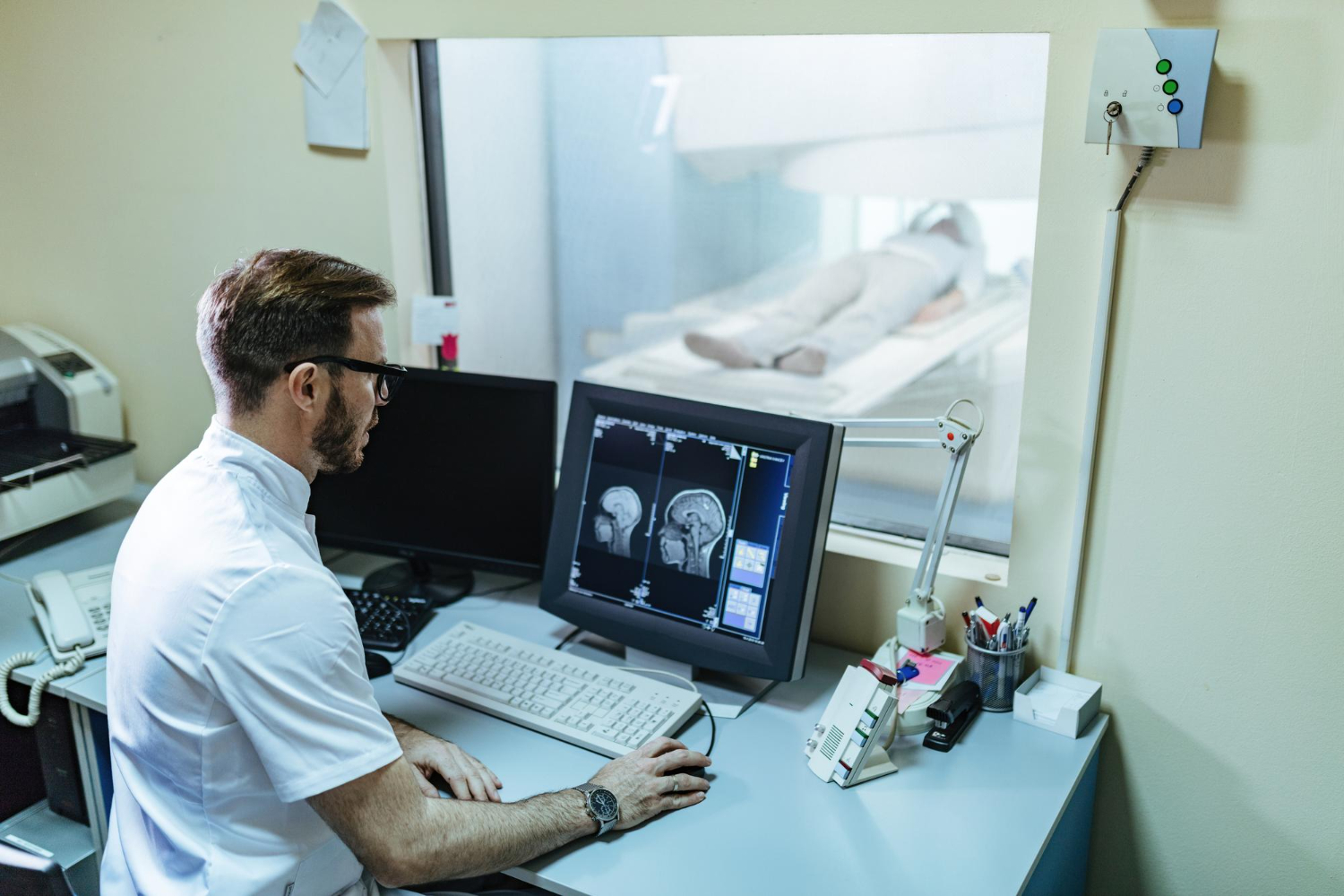
Can you use NHS scans and diagnostic tests for private treatment? In many cases, yes, but the process is often more complicated than patients expect. This guide explains how NHS MRI scans, X-rays and diagnostic reports can support private healthcare decisions, why obtaining copies can be slow and inconsistent and when hospitals may require updated imaging before treatment. Learn how self-pay patients can navigate NHS records, private consultations and overseas treatment pathways more effectively.
For many patients considering private treatment after an NHS referral, one of the first practical questions is whether existing NHS scans and diagnostic test results can be used by a private hospital or overseas healthcare provider. In principle, the answer is yes. In practice, the process is often slower, more erratic and more frustrating than patients expect.
This matters because diagnostics sit at the centre of almost every orthopaedic treatment pathway. A patient with knee pain may need an X-ray or MRI before a consultant can recommend a knee replacement or arthroscopy. A patient with hip pain may require imaging to confirm the severity of arthritis. A patient with spinal symptoms may need MRI scans before any treatment plan can be assessed safely. Without the right diagnostic information, a private provider cannot responsibly confirm whether surgery is appropriate.
In theory, NHS scans, imaging reports and diagnostic results form part of a patient’s medical record. Patients are entitled to request access to their records and many assume this means they can simply ask for their scans and pass them to a private provider. Sometimes that is exactly what happens. A patient requests the imaging, receives a digital copy or access link and the private consultant can review the material quickly.
Unfortunately, that is not always the reality.
One of the biggest difficulties is that patients often need to go back through their GP practice or hospital department to request copies of their records. Getting a GP appointment can itself take time. Even when a patient does secure an appointment or submits a request, the process can be slow. Different NHS trusts and GP practices handle requests in different ways. Some respond efficiently. Others are difficult to contact, unclear about the process or slow to release the information.
For patients already in pain, this delay can feel absurd. They may have waited weeks or months for the original scan, only to face another administrative wait simply to obtain a copy of something that already exists.
There is also a technical problem. A written imaging report is not always enough. For orthopaedic treatment, a consultant may need to see the actual images, not just the radiologist’s summary. A report saying there is “moderate degenerative change” or “disc protrusion” may help, but a surgeon will often want to review the scan personally before advising on treatment. This means the patient may need the images in a usable digital format, often via CD, secure download or imaging transfer system. That handover is not always smooth.
The result is that patients can find themselves stuck between systems. The NHS has the scan, the private provider needs the scan and the patient is left trying to bridge the gap.
A further issue is clinical freshness. Even if the patient eventually obtains the scan, it may no longer be recent enough to support a treatment decision. Orthopaedic conditions can change. Arthritis can deteriorate. Soft tissue injuries can worsen or partially heal. Spinal symptoms can evolve. If the scan is several months old, a private hospital may request updated imaging before offering surgery or confirming a treatment package.
This is not bureaucracy for the sake of it. It is clinical governance. A healthcare provider must make treatment decisions based on current information. If a patient is being assessed for surgery abroad, the receiving hospital has to be confident that the medical evidence reflects the patient’s current condition. Outdated diagnostics can create risk, uncertainty and unnecessary delay.
That does not mean NHS diagnostics are useless for private treatment. Far from it. Recent NHS scans, blood tests, X-rays, MRI results and consultant letters can be extremely valuable. They can help a private hospital understand the patient’s history, avoid unnecessary duplication and move more quickly towards a treatment recommendation.
The problem is reliability. Patients cannot assume that obtaining NHS records will be fast or straightforward. They should request copies as early as possible and ask specifically for both the written reports and the actual imaging files. They should also keep copies of referral letters, clinic letters, medication lists and any previous treatment notes. The more complete the information, the easier it is for a private provider to assess the case.
For patients considering treatment abroad, this is where a medical travel platform such as My Medical Gateway can play an important role. Rather than leaving patients to navigate every step alone, MMG helps patients understand what documentation is needed, what information a hospital is likely to request and whether existing diagnostics may be sufficient for initial review.
In many cases, MMG Accredited Healthcare Providers can assess available records before advising whether further tests are needed. If updated diagnostics are required, these can often be arranged privately and quickly, either before travel or as part of the treatment pathway. This can be far faster than waiting for further NHS appointments, especially where the patient is already caught in a delayed referral or diagnostic queue.
For self-pay patients, the key point is simple: NHS scans can often support private treatment, but they should not be relied upon as the only route forward. The process of obtaining them can be slow, inconsistent and frustrating. By the time they arrive, they may no longer be sufficient or recent enough.
Patients who are serious about exploring private surgery abroad should gather whatever NHS documentation they can, but they should also be prepared for the possibility that fresh diagnostics may be required. That is not a setback. It is often the step that allows a proper treatment plan to be confirmed and the patient to move forward with confidence.
For patients living with pain, reduced mobility and long NHS delays, the priority is not simply owning a scan. It is reaching a clear, current and clinically sound decision about treatment. That is where the right private pathway can make the difference.
Leave a Reply