
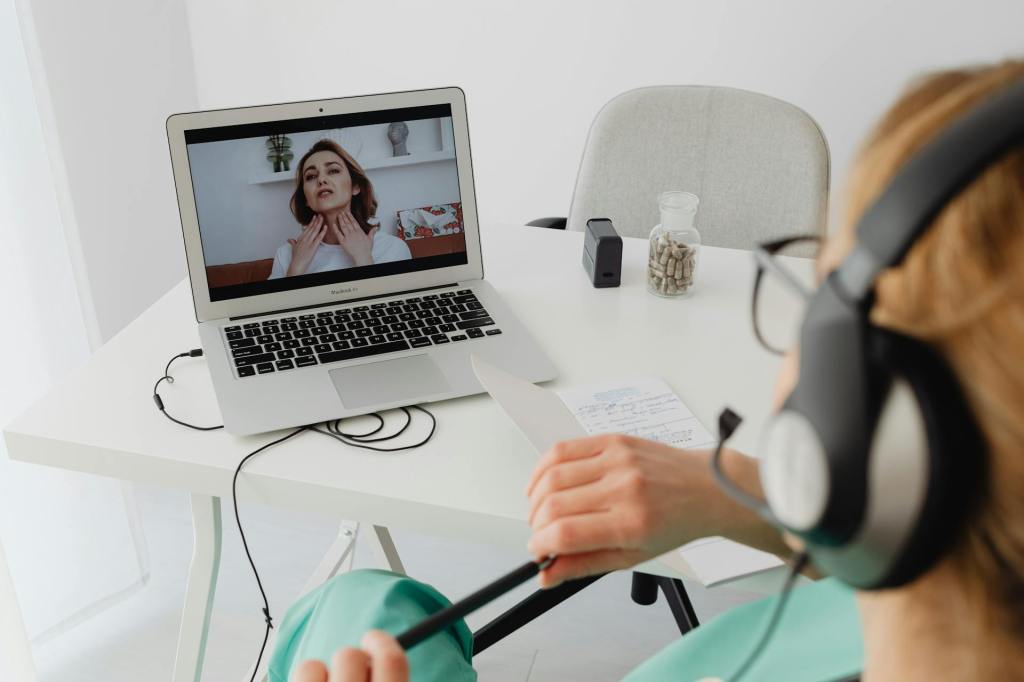
Remote diagnosis is rapidly becoming the standard model for modern healthcare, driven by technology, rising demand and system-wide capacity pressures. Evidence shows it is clinically effective, improves access and reduces waiting times. The NHS is now actively adopting this approach, including allowing doctors to assess patients from overseas. For patients, this confirms that remote consultation is no longer a compromise but a credible, efficient pathway to faster diagnosis and treatment across borders.
Remote diagnosis is no longer a future concept. It is now a routine part of how modern healthcare is delivered, accessed and scaled. What was once seen as a compromise has evolved into a clinically robust, technologically enabled and widely accepted pathway for both patients and practitioners. The data now makes that point unequivocally.
At its core, remote diagnosis is the process by which a clinician assesses, advises and manages a patient without being physically present. This is done through video consultation, secure messaging, digital health records, imaging and laboratory results. In many cases, it allows a doctor to reach a confident diagnosis or treatment plan with the same level of clinical certainty as a traditional face-to-face appointment.
The reason this works is because modern medicine is largely information-driven. Diagnosis depends heavily on patient history, imaging and test results rather than physical examination alone. Technology now allows all of this information to be captured and reviewed instantly across borders. High-resolution scans can be shared in seconds, blood results are uploaded directly and consultations take place over stable video platforms. The doctor does not need to be in the room to see what matters.
The UK has already tested remote diagnosis at national scale. During the pandemic, around 90 per cent of GP consultations shifted to remote delivery almost overnight. While usage has since normalised, the structural change has remained. Face-to-face GP appointments in England have fallen from around 81 per cent in 2019 to roughly two-thirds today, with remote and telephone consultations now a permanent feature of primary care.
At the same time, digital consultation systems have been widely adopted across the NHS. Studies show that online consultation platforms have been implemented across a substantial proportion of GP practices, reaching up to 43.7 per cent of practices at peak usage. This is not a niche service: it is embedded infrastructure.
The next question is whether it works clinically. The evidence here is equally clear. Large-scale reviews, including UK-based studies, show that remote consultations are as effective as in-person care for a range of conditions, particularly in areas such as mental health and chronic disease management. They also reduce waiting times, lower costs and improve efficiency. In some cases, such as in long-term condition monitoring, telemedicine has even been shown to reduce hospitalisation and mortality risk.
This matters because healthcare systems are under pressure everywhere. Demand is rising, workforces are constrained and waiting lists remain high. Remote diagnosis offers a way to deploy clinical expertise more efficiently. It allows doctors to see more patients, reduces unnecessary in-person appointments and enables earlier decision-making.
The United Kingdom is now formally embracing this model at a policy level. The NHS has begun piloting a scheme that allows GPs to work remotely from overseas, supporting British patients from countries such as Australia, India and Malaysia. Under its 10-Year Plan, the NHS is explicitly exploring how UK-registered doctors based abroad can deliver consultations, review clinical information and support primary care services from a distance.
This is a significant moment. The NHS is now accepting a principle that would have been politically difficult only a few years ago: that a patient in Britain can be assessed and managed by a doctor who is not physically in Britain.
The pilot with Asterix Health makes this explicit. GMC-registered clinicians working overseas are providing triage, reviewing laboratory results and clinical correspondence and conducting consultations by phone and video. This is remote diagnosis operating at scale within the UK system.
There is, however, a notable inconsistency in how this shift is framed. The NHS has emphasised that these clinicians are UK-trained and UK-registered, as if geography were the key variable. Yet the NHS has relied for decades on internationally trained professionals to deliver frontline care within its own hospitals. Around one in five NHS staff report a non-British nationality and a substantial proportion of doctors practising in the system qualified abroad. The idea that quality is defined by location does not withstand scrutiny.
What matters is training, accreditation and institutional standards, and this is the foundation on which MMG operates.
For patients using the MMG platform to identify an affordable treatment centre in the European Union, remote diagnosis is not a barrier. It is the starting point, allowing patients to engage with fully accredited, world-class private hospitals across the EU before travelling. Clinical information is reviewed in advance, treatment options are defined clearly, and pricing is transparent and part of an all-inclusive medical travel package for peace of mind. The pathway is established before the patient leaves home.
This reduces uncertainty rather than introducing it. It also accelerates care. Instead of waiting months for an initial consultation, patients can obtain specialist input quickly, often within days. Diagnostic work can be coordinated locally through access to discounted UK national providers and shared digitally. By the time a patient travels, the clinical pathway is already in place and treatment can proceed without delay.
The NHS pilot should therefore be understood as validation, not innovation. The same principles now being used to increase productivity and relieve pressure on British primary care are the ones that underpin cross-border care through MMG.
For patients, the conclusion is straightforward. If it is clinically acceptable for an NHS patient to be assessed remotely by a doctor working from another continent, then remote engagement with a specialist team in a leading European hospital should not be seen as a risk. It is the same model, applied in a different context, often with faster access and greater choice.
Remote diagnosis has become the new normal because it reflects how modern healthcare actually works. It is efficient, data-driven and scalable. It allows expertise to move without requiring patients to wait. It connects systems that were previously constrained by geography. For MMG users, the question is no longer whether remote diagnosis is safe or credible. The NHS has already answered that. The real question is how quickly patients are prepared to use it to access better, faster care.
 My Medical Gateway Blog
Leave a comment