
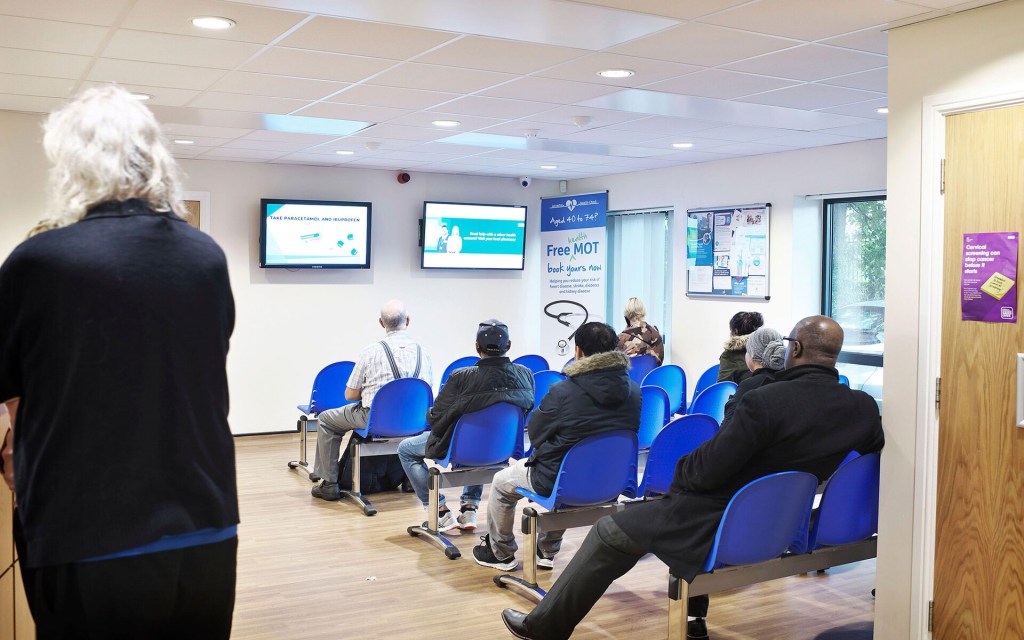
England’s NHS waiting list remains historically high, but the headline figures tell only part of the story. While recent data shows modest improvements, millions of patients continue to face long waits for planned treatment and many more may never even reach official waiting lists at all. This update examines the latest evidence on NHS England’s backlog, performance against access targets and the emerging issue of lost GP referrals, offering a clearer picture of what patients are experiencing today.
The NHS waiting list in England remains one of the most closely watched indicators of the state-administered health system’s performance. While headlines often focus on whether the backlog is rising or falling month by month, the underlying picture is more complex, and more concerning, than a single number suggests.
As of late 2025, the NHS England waiting list for planned treatment stands at approximately 7.3 to 7.8 million patient pathways, depending on the reporting period. This is below the peak reached in late 2023, when the list exceeded 7.7 million, but it remains dramatically higher than pre-pandemic levels, which hovered around 4.4 to 4.6 million. In simple terms, England is still carrying an excess backlog of around three million patients compared with historical norms.
The NHS has undoubtedly delivered more activity. The number of operations, outpatient appointments and diagnostic tests that have been completed over the past two years has increased. Long waits of more than two years have been reduced from their pandemic highs. However, overall performance against the NHS’s own access standards remains weak. The long-standing target that 92 percent of patients should begin consultant-led treatment within 18 weeks of GP referral is still far from being met. Current performance is closer to 60 percent, meaning that roughly two in five patients wait longer than the NHS itself deems acceptable.
Behind these headline figures lie important variations. Orthopaedics, ophthalmology, gynaecology, ENT and pain management continue to experience some of the longest waits. These are not typically life-threatening conditions, but they are often life-limiting – affecting mobility, independence, ability to work and mental health. For many patients, delays translate into prolonged pain, reduced quality of life and increasing reliance on medication.

In December 2025, an additional and less visible problem was brought into sharper focus. A watchdog report, highlighted by The Guardian on 7 December 2025, revealed that around 14 percent of GP referrals in England never reach a hospital waiting list at all. These referrals are effectively lost within the system – rejected, delayed, or untracked – without patients necessarily being informed. In a system already managing close to eight million people on official waiting lists, this represents a substantial cohort of patients who are waiting without knowing they are waiting.
This finding matters for several reasons. First, it suggests that the published waiting list figures almost certainly understate the true scale of unmet need. Second, lost referrals can delay diagnoses and interventions, allowing conditions to deteriorate. Third, the lack of visibility undermines patient trust. Waiting is difficult, but uncertainty is worse. Patients who believe their referral is progressing may wait months before discovering that nothing has happened.
The NHS has acknowledged the pressures that contribute to these failures. Workforce shortages, particularly in specialist roles, continue to constrain capacity. Seasonal surges – winter respiratory illness, emergency admissions and ambulance pressures – regularly divert resources away from elective care. At the same time, demand continues to rise due to population ageing and higher prevalence of chronic conditions. Even as activity increases, the system struggles to get ahead of demand.
Government and NHS England leaders have reiterated commitments to reducing waiting times and restoring performance standards. While targeted funding and operational reforms have delivered incremental improvements, most independent assessments agree that a return to pre-pandemic waiting list levels will take many years, even under optimistic scenarios. In the meantime, millions of patients remain caught in prolonged queues or uncertain pathways.
It is within this context that patient behaviour is changing. Increasing numbers of people are exploring private and overseas options as a response to delay, uncertainty and opacity. In 2024 the number of UK outbound patients reached 523,000, up from 234,000 in 2021. The growth of medical travel reflects a desire for timely, predictable care, particularly for procedures where outcomes are well established and risks are manageable.
This does not diminish the NHS’s strengths. Emergency care, cancer treatment and acute services continue to deliver positive outcomes under immense pressure. But for planned care, the system is struggling to offer certainty. The combination of long waits and lost referrals highlights a structural issue: patients lack clear, trackable pathways from referral to treatment.
This is where MMG’s platform becomes relevant as a complementary option at a moment of critical constraint. MMG’s role is to provide verified access to wordlcalss accredited private European healthcare providerswith clear and immediate timelines for patients at prices they can afford. As waiting lists remain historically high and referral failures persist, the demand for clarity, choice and accountability in healthcare is unlikely to diminish.
The NHS waiting list is no longer just a measure of delay. It is a signal of how well the system can guide patients through uncertainty. Until that guidance improves, patients will continue to seek alternatives that offer what the system currently cannot always guarantee: visibility, timeliness and reassurance.
 My Medical Gateway Blog
Leave a comment