
The Financial Times reported on 24 November 2025 that the government plans to build 250 new community NHS clinics using private finance, but only for outpatient diagnostics such as X-rays and MRI scans. The move echoes the old PFI model used under Tony Blair, raising concerns about long term costs despite the limited scope. With NHS capital budgets depleted and waiting lists rising, the temptation to rely on private money is understandable but risky.
The Financial Times has reported that the government is preparing to build a new generation of community-based NHS clinics using private capital. What is striking in the FT story is not simply the return of private finance but the fact that these facilities are intended solely for outpatient services, not surgery or complex clinical work. The government’s plan is for centres offering diagnostics such as X-rays and MRI scans, designed to ease pressure on hospital backlogs by expanding local access to basic services rather than reshaping the core of NHS care.
Even so, the echoes of the past are unmistakable. For anyone who remembers the long and costly legacy of the Private Finance Initiative (PFI), the sight of private companies being invited once again to design, build, and manage NHS premises raises familiar anxieties. This time Ministers insist that the new arrangements are limited in scope, focused on outpatient diagnostics, and recorded on the government balance sheet. But as the FT carefully notes, the infrastructure, incentives and long-term contractual risks bear a striking resemblance to what came before.
According to the report, the Chancellor Rachel Reeves will announce up to 250 neighbourhood health centres in Wednesday’s Budget. Private investors will finance a proportion of them, with contracts running for 25 to 30 years. The public sector will provide land. Private partners will build and operate the facilities. NHS leaders will hope that placing these clinics in communities reduces waiting lists by bringing care closer to patients’ doors. Only the most deprived areas will be first in line for the programme.
At first glance this appears a pragmatic response to the NHS capital crisis. The service faces a record maintenance backlog of £15.9 billion. Its capital investment trails comparable systems by some £40 billion. Hospitals built in the 1960s and 1970s are failing. Estates budgets have been raided for years to plug day-to-day gaps. No one seriously disputes that the NHS desperately needs new buildings and updated equipment. The question, as always, is who pays the bill and when?
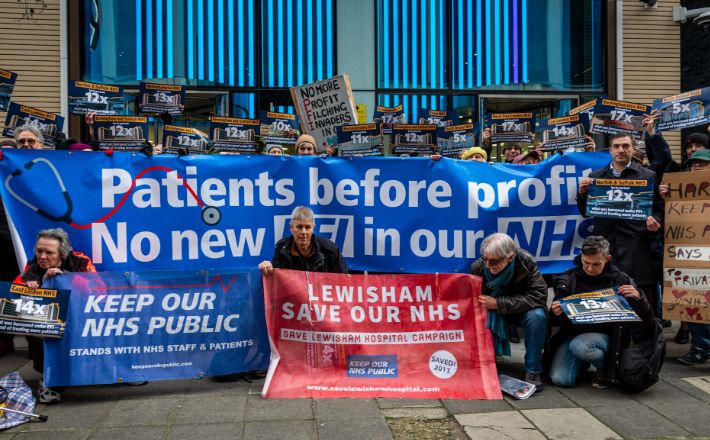
The FT makes clear that this proposal sits at the centre of a fierce political debate. Labour MPs are already warning that any return to PFI-like structures risks repeating the mistakes of the Blair years, when the government mass-produced hospitals without the public borrowing appearing on the books. The initial optics were attractive. The long-term costs were less so. Local trusts were left with fixed payments stretching for decades, often inflated by maintenance disputes, contractual complexity, and onerous management fees. In 2018, the Conservatives finally scrapped PFI after the National Audit Office found that taxpayers had paid far more than if the state had simply borrowed directly.
This is why the FT story is important. The government insists that these outpatient clinics are a modest step, accounting fully for the spending and avoiding off-balance sheet borrowing. Ministers and NHS leaders say the new contracts are simpler, better supervised, and better designed. They emphasise the narrow scope of these clinics, which will not provide surgery or inpatient care. Yet the basic mechanism remains: long term private contracts delivered in response to structural public underinvestment.
For NHS management, the attraction is obvious. They have run out of room to manoeuvre. NHS England cannot rebuild hospitals or expand diagnostics at the necessary scale from public funds alone. Private capital can move quickly when government cannot. This is why NHS leaders, quoted in the FT, continue to push for a broader reopening of private finance across the estate, including the stalled new hospitals programme.
But the obvious risks cannot be ignored. As the FT notes, some NHS trusts are still struggling to unwind 25-to-30-year PFI contracts agreed decades ago. Several are tied up in legal disputes about the condition of the buildings they paid handsomely to maintain. Others are weighed down by debt obligations that distort operational budgets. Even with better contract design, the unavoidable question remains: are we simply committing future taxpayers to another generation of payments because today’s government cannot or will not fund capital investment directly?
For MMG, the story highlights the widening gap between what the NHS aspires to deliver and what it can deliver in practice. New outpatient buildings may improve diagnostic capacity but they do not solve today’s treatment bottlenecks and they do not give patients control over their waiting times. Until surgical capacity grows, people will continue to look for faster alternatives at home and abroad, which is precisely why MMG exists.
The FT’s report recognises the legitimate need for investment and the pitfalls of the past. What remains to be seen is whether the government can resist the temptation to expand this outpatient-only model into something broader and riskier. If history teaches us anything, it is that private finance in the NHS rarely stays small and rarely stays simple. The hope is that this time will be different. The lesson is that hope is not a substitute for scrutiny.
 My Medical Gateway Blog
Leave a comment