
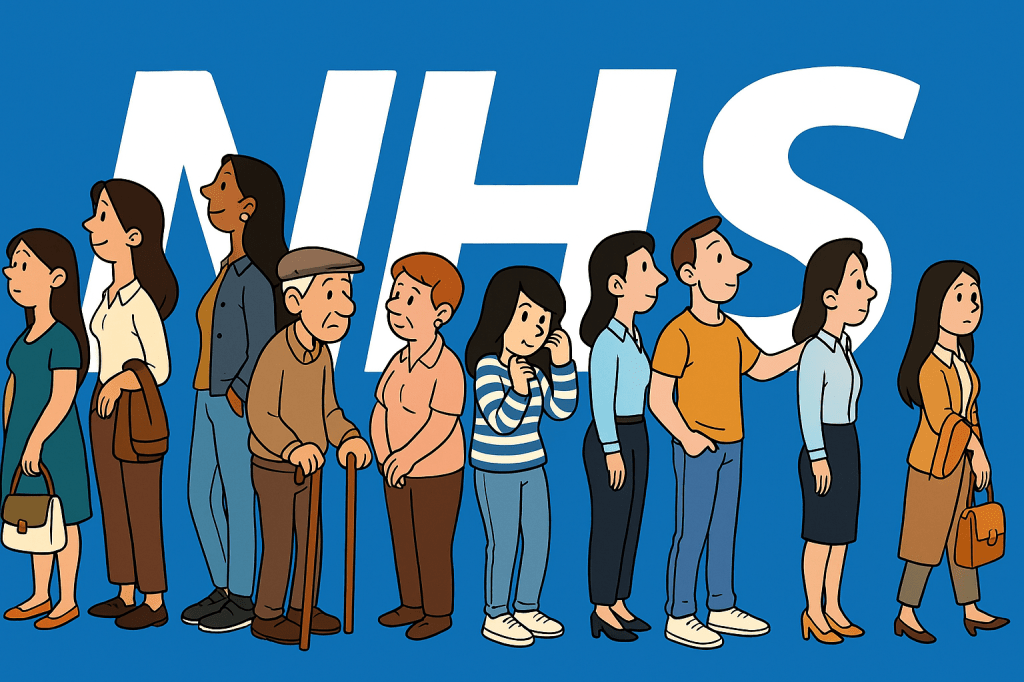
Industrial action, record waiting lists, cancelled operations and widespread administrative failures now define daily life inside the NHS. More than a million appointments have been rescheduled because of strikes, while outdated communication systems and an uneven NHS App rollout leave many patients without reliable information. Routine letters arrive late or not at all and cancelled surgeries are increasingly left unrebooked. Together these pressures create a system where delays are normal and predictable access to care is becoming increasingly rare.
For anyone living or doing business in the UK it can feel as if bad news about the National Health Service is now a constant background noise. Strikes, record waiting lists, cancelled operations, letters that arrive after the appointment date and an app that promises a digital front door but often behaves more like a revolving one. None of these stories sit in isolation. Together they describe a system that is struggling to deliver predictable care in a predictable way, which is exactly what patients and employers need most.
Industrial action has become the most visible symbol of that strain. Across the past two years more than a million appointments have been rescheduled because of strikes across hospital outpatient and inpatient care, mental health and community services. Earlier waves of resident doctor walkouts alone led to hundreds of thousands of appointments and operations being cancelled then rebooked. These are not abstract statistics. Every cancellation is a day of annual leave wasted, a parent trying to find childcare twice, an employer losing productivity while a member of staff waits longer for treatment and recovery.

The financial cost is equally stark. Estimates suggest that industrial action has added billions of pounds of pressure across a period of roughly eighteen months. That money has to be found in a budget already stretched by staffing gaps, rising demand and an ageing estate. Strikes have not caused the NHS crisis but they have magnified it and pushed back any realistic timeline for tackling the backlog.
Behind the strike headlines sits another chronic problem that patients notice every day rather than only on news bulletins. Administrative dysfunction has become routine. Research shows that most people using NHS services have experienced issues such as delayed or missing test results, difficulty cancelling or changing appointments and letters that arrive after the scheduled date. These are simple failures that compound clinical risks and keep people off work or out of education for longer than necessary.
Surgery cancellations are a particularly painful example. The proportion of operations cancelled at the last minute and not rebooked within the 28 day standard has more than trebled over the past decade. Today many thousands of people each year find that not only is their operation cancelled, but no new date is offered within the timeframe that policy requires. For the patient this is not a statistic but another month living with pain or disability, often after having fasted, arranged time off work and prepared themselves for an operation that simply did not happen.
The way the NHS communicates with patients sits at the heart of many of these failures. Official policy now talks about a digital-first approach in which the NHS App, text messages and email become the default channel with letters reserved for those who cannot use digital tools. Ministers have spoken of the potential to replace tens of millions of letters with digital notifications and to save significant sums in the process. In parallel, however, there is a quiet recognition that many patients remain dependent on post because of age, disability, lack of internet access or simple preference for paper records. The result is a messy hybrid world where some people receive multiple overlapping messages while others fall between the cracks and hear nothing at all.
The NHS App sits at the centre of this digital push and again the story is mixed. The app has grown significantly since launch and saw mass adoption during the pandemic when the COVID Pass was widely used for travel and events. Yet evaluations point to wide variation in uptake between practices and regions and clear inequalities in who uses the app, with lower adoption among older people, those in more deprived areas and those without reliable digital access. Surveys show that many users still struggle with technical problems ranging from difficulty downloading the app to challenges registering, logging in or navigating the interface. In other words the very people who most need predictable access are often the ones left wrestling with passwords, error messages and dead ends.
For patients and employers this combination of industrial disruption, administrative fragility and uneven digital change adds up to the same lived experience. Care is harder to access, less predictable and more likely to be delayed or cancelled at short notice. People with long term conditions or cancer worries find themselves chasing results or letters instead of focusing on their health. Managers see staff absence stretch from weeks into months because diagnostic and treatment pathways stall.
At My Medical Gateway we do not pretend that a single platform can fix the structural problems of a national health service. What we can do is acknowledge the reality that sits behind the headlines and build alternatives that treat people’s time as seriously as their symptoms. When the public system is cancelling operations, struggling with basic administration and rolling out digital tools that do not yet work for everyone, it is understandable that patients and employers start looking for more dependable routes through. Our job is to make those routes clear, transparent and clinically robust so that individuals and organisations can navigate a difficult landscape with more certainty and with far less noise.
 My Medical Gateway Blog
Leave a comment