
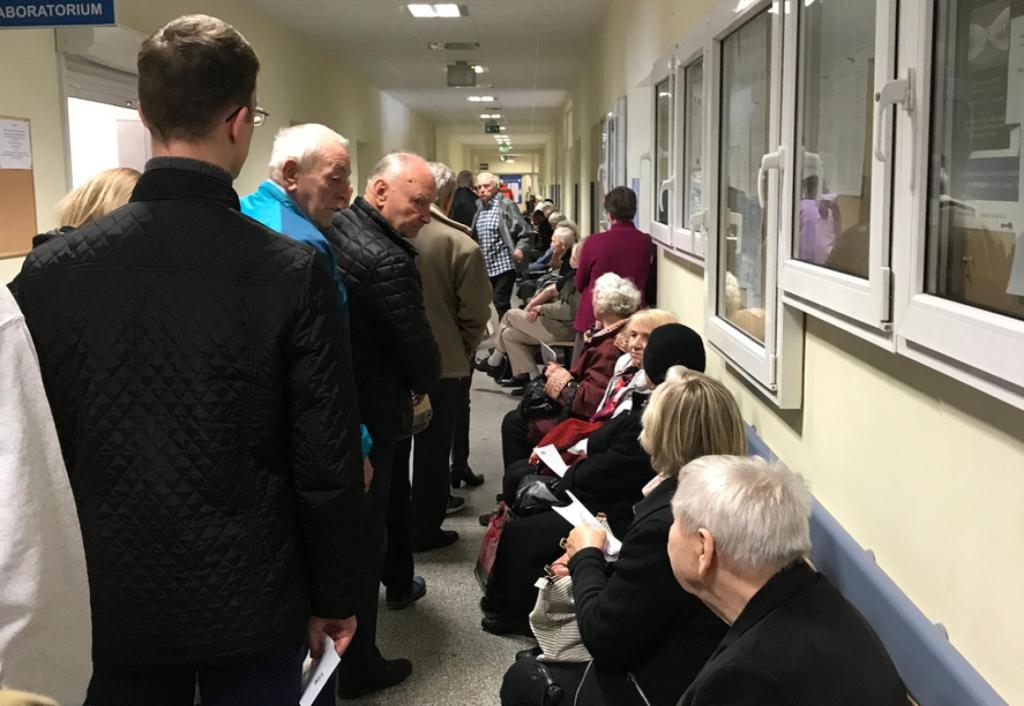
A record 523,000 Britons travelled abroad for medical treatment last year, according to The Sunday Telegraph, as NHS waiting lists reached 7.4 million despite massive new funding. With hip replacements, cataract surgery and dentistry leading the exodus, patients are increasingly seeing overseas care not as risky “medical tourism” but as a rational response to years of delay at home. Their choices highlight a system under strain – and a public unwilling to wait in pain any longer.
A record 523,000 Britons travelled abroad for medical treatment in 2024, according to figures from the Office for National Statistics (ONS) reported by The Sunday Telegraph. That’s a 50 per cent increase in just two years, and a figure that exposes the growing inability of the NHS to deliver timely care. For many, going overseas is no longer an indulgence or a gamble – it’s the only way to reclaim a basic standard of health and quality of life.
The destinations most frequently chosen – Turkey, Poland, Romania, Portugal, India and Italy – show a mix of affordability, accessibility and growing reputation. Common procedures include hip and knee replacements, cataract surgery, dental care and cosmetic treatments. Many of these operations cost half or less of UK private prices, as prices quoted on MMG’s homepage clearly demonstrate.

The NHS waiting list in England now stands at 7.41 million, up from 6.1 million just three years ago. Despite a £25 billion funding injection from Chancellor Rachel Reeves, the queue for treatment continues to lengthen. Patients are not leaving the country because they want to – they are doing so because they cannot wait any longer.
In the words of Dennis Reed of Silver Voices, “People are using their life savings to obtain treatment that they cannot get on the NHS.” Many are elderly, living in chronic pain, or unable to work because of delayed surgery. For some, returning to their country of origin in Eastern Europe has become the most practical route to care.
Health Secretary Wes Streeting has called the trend “appalling,” pledging to “overhaul the NHS” and to end what he described as a “two-tier system.” His concern about unregulated foreign clinics and post-operative complications is not unfounded. But focusing on the dangers of treatment abroad misses the larger point: people are going overseas because the system at home no longer works for them.
Government figures show that even after “five million extra appointments,” the waiting list fell by only 206,000 – a modest dent in an enormous backlog. Meanwhile, reports of 12-hour A&E waits and continuing industrial unrest among junior doctors reinforce the sense of a service at breaking point.
There is an irony here. The NHS itself has quietly funded treatment abroad for some patients, with the number of NHS-paid procedures overseas rising by 42 per cent in two years. That proves the principle: cross-border healthcare can work. The problem is not the concept of travelling for care – it’s the lack of an organised, safe and transparent framework to make it accessible to ordinary patients.
In this context, going abroad is not a betrayal of the NHS; it’s a logical response to system failure. The UK’s proud tradition of universal healthcare means little if millions wait years for operations while others pay privately or fly overseas. For most people, the decision to travel for treatment is not about luxury – it’s about survival, dignity and time.
The Sunday Telegraph’s report captures a critical turning point in public behaviour: healthcare abroad is no longer fringe, but mainstream. It signals both the globalisation of healthcare and the deep frustration of British patients. Until the NHS can deliver timely access to essential care, the steady flow of patients to Istanbul, Lisbon or Warsaw will not just continue – it will grow.
At My Medical Gateway, we see this shift not as an indictment of those who go abroad, but as evidence of their determination to take control of their health when the system cannot. MMG is here to help in an organised, professional and safe pathway to high quality treatment including post-op recovery at prices that are affordable.
 My Medical Gateway Blog
Leave a comment