
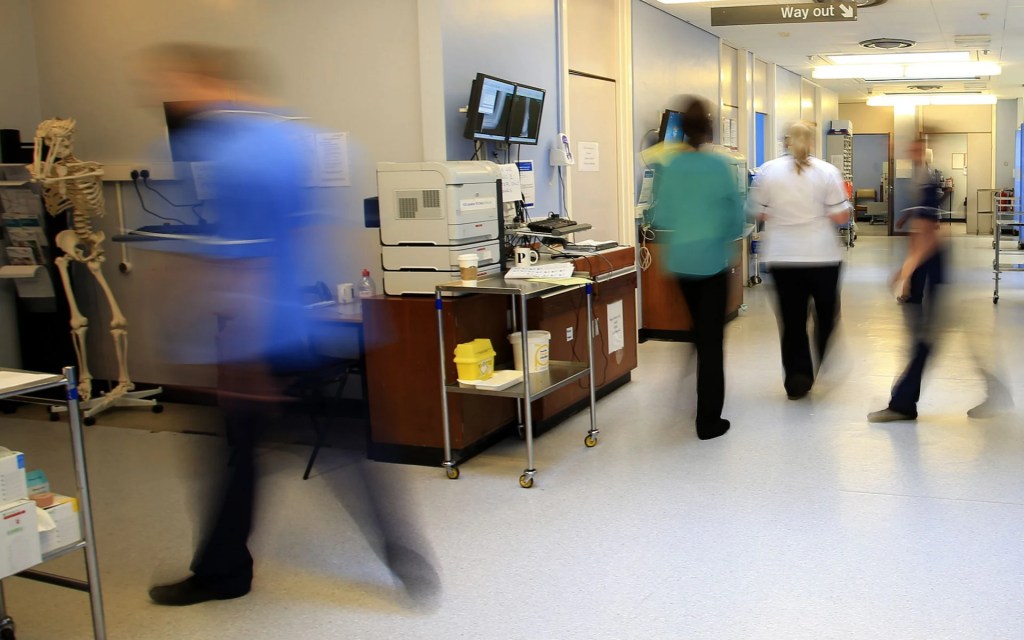
The NHS is now carrying close to £60 billion in negligence liabilities, admitting failures in vetting overseas clinicians, leaving over 600,000 women in gynaecology queues, and losing 17 working days per staff member to broken IT. For patients, the question is no longer about loyalty but risk. Increasingly, those who cannot wait are now arranging procedures independently, with an estimated 420,000 people in Britain travelling overseas for treatment in the last year.
A series of recent data points suggest that the UK’s healthcare system is straining under pressures that will take years, if not decades, to resolve through central reform. Four distinct indicators stand out: clinical negligence liabilities approaching £60 billion, loopholes in practitioner credentialing, persistent deterioration in women’s health access, and extensive productivity loss from outdated digital infrastructure. Each alone would merit concern; together, they reflect structural constraints that limit the system’s ability to deliver timely, predictable care. For patients requiring treatment now rather than in a future reformed system, alternative routes are not merely convenient but rational.
NHS Resolution’s latest annual report places total clinical negligence provisions at £49.7 billion, rising to £57.7 billion when non-clinical claims are included (Source: NHS Resolution Annual Report 2023/24). Of that sum, 63% is attributable to obstetrics-related incidents, where even a single case of avoidable harm can result in a compensation liability exceeding £1 million (Source: NHS Resolution Maternity Incentive Scheme Review 2024). While high-profile payouts attract headlines, the accumulated liability is better viewed as a financial index of systemic overstretch: delays, misdiagnoses and preventable harm arising from an environment in which capacity routinely lags behind demand. The number of claims increased by 9% year-on-year, with no reason to expect a reversal in trend.
At the same time, public confidence in practitioner oversight has been tested by revelations that some doctors registered to practise in the UK were previously sanctioned abroad. According to data obtained by The Times, at least 85 overseas-trained doctors had been subject to disciplinary action in their home countries but were able to secure UK licences without full disclosure or detection (Source: GMC figures reported in The Times, Oct 2025). In one documented case, a clinician convicted of manslaughter overseas passed through initial screening. The broader context is a shift in workforce composition: 49% of all new medical licences issued in 2023 were to international graduates, up from 31% five years earlier (Source: GMC State of Medical Education Report 2024). While international recruitment remains essential, reliance on expedited registration processes introduces risk that verification standards may not consistently match patient expectations.

Women’s health statistics reveal another sector under strain. The Department of Health and Social Care’s Women’s Health Strategy Progress Update (2024) reports over 600,000 women on gynaecology waiting lists, with the specialty growing at twice the rate of any other discipline. In several NHS Trusts, waiting times for hysteroscopy or hysterectomy exceed 500 days. The UK ranks 24th out of 28 OECD countries for female health outcomes (Source: OECD Health at a Glance 2023). The government’s Women’s Health Ambassador, Dame Lesley Regan, has publicly acknowledged that service provision in this sector remains stuck in the 1990s. Such statements, while candid, imply that reform in this domain will be protracted rather than rapid.
Operational efficiency is further undermined by digital infrastructure that lags contemporary requirements. A YouGov survey commissioned by Cellnex UK (2024) found that frontline NHS staff lose an average of 122 working hours per year, the equivalent of 17 full days, to IT outages, slow loading times or connectivity failures. 54% of respondents reported that such interruptions had directly affected patient care. Separately, an NHS Confederation briefing estimated that up to 30 million GP appointments annually are delayed or duplicated due to outdated record systems and lack of integration (Source: NHS Confederation Digital Efficiency Report 2023). Efficiency losses of this magnitude are not cosmetic bugs; they materially compress capacity even when clinical staff are available.
Taken together, these figures describe a system constrained by legal liabilities, verification gaps, uneven access and degraded operational tools. None of these factors will be swiftly resolved by additional funding alone. Even where policy direction is clear, towards digitalisation, modernised credentialing and targeted women’s health reform, the implementation timelines will extend over years rather than months.
It is in this context that My Medical Gateway (MMG) has emerged, enabling patients to access treatment at internationally accredited hospitals across Europe, where waiting times are measured in a few weeks rather than months or years. Practitioner credentials are verified through both domestic regulators and external accreditation bodies, reducing ambiguity. Costs are quoted transparently rather than estimated retrospectively. For disciplines such as orthopaedics, bariatrics and gynaecology, clinical standards in EU centres match or often exceed UK benchmarks.
Such routes are not a replacement for the NHS. They are a rational response to a system whose recovery trajectory is protracted and uncertain. While policymakers focus on repair, patients requiring timely intervention will continue to act pragmatically. Choosing treatment independently is no longer unconventional; it is prudent.
 My Medical Gateway Blog
Leave a comment